
ab.strac.tion
A series of articles discussing the complexity of engineering solutions that simplify complex systems.
BLOG
THE

Why 60°C for 24 Hours Isn't Just a Suggestion: The Case for Proper Sample Drying in Spectroscopy
If you've spent any time in an analytical lab, you've probably seen it happen: a sample goes into the desiccator or drying oven, someone gets impatient, and four hours later it's back out and headed for the instrument. The scan runs. The peaks look... mostly fine. And the moisture that should have been driven off six hours earlier is still sitting in the matrix, quietly corrupting the data.
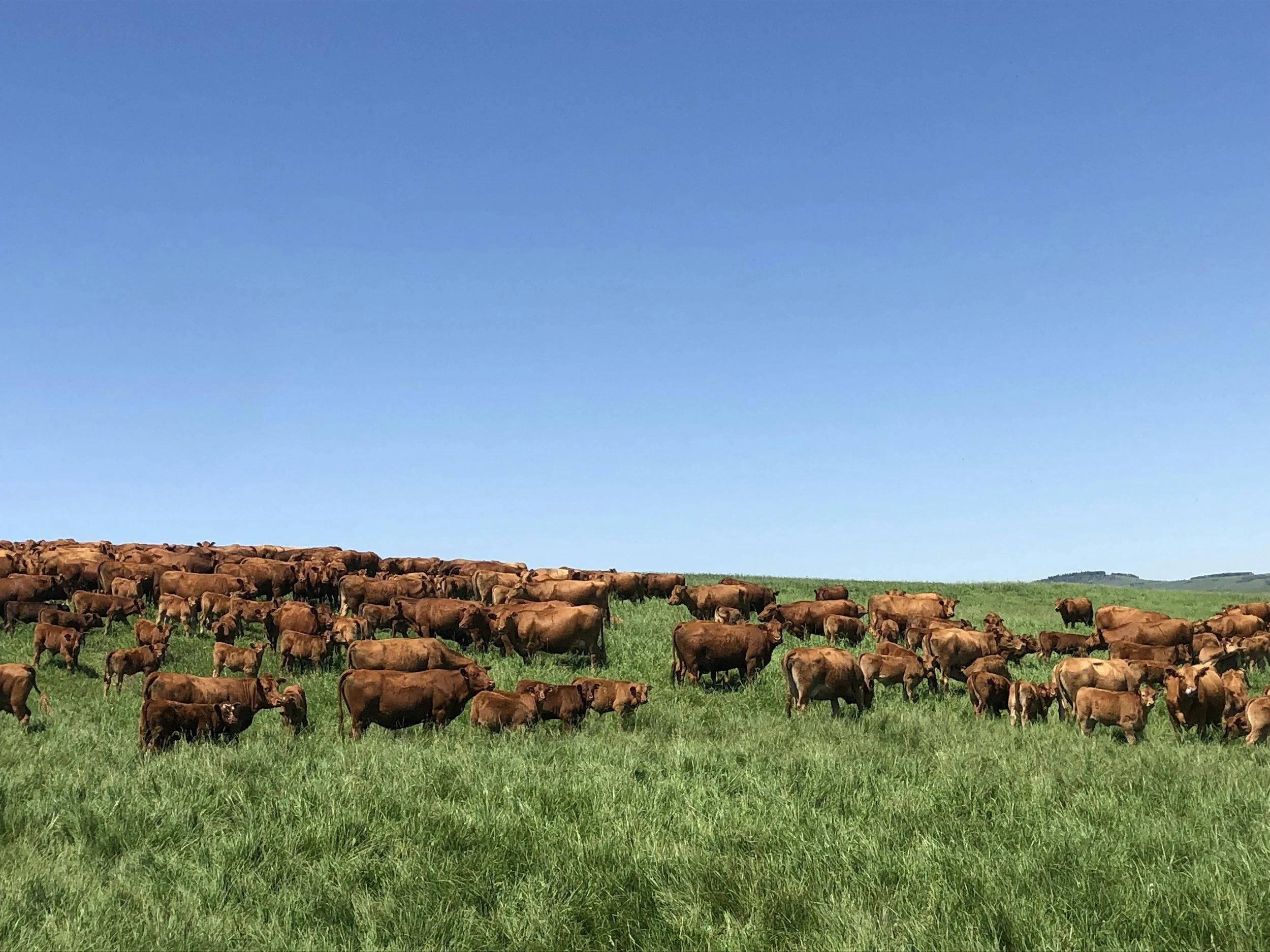
The Hidden Complexity of Scanning Fresh-Cut Forage: Why "Wet" Doesn't Mean "Simple"
If you've ever pulled a handful of freshly cut hay or pasture straight from the field, tossed it under an NIR sensor, and gotten a result that didn't quite match what you expected—you're not alone, and you're not doing anything wrong.
The Silent Interference: How Silica Shapes - and Skews - NIR Analysis of Grass and Forage Tissue
Near-infrared spectroscopy (NIRS) has become one of the most powerful tools in the forage and turfgrass analyst's toolkit. Fast, non-destructive, and capable of simultaneously predicting a dozen nutritional parameters from a single scan, it has largely displaced wet chemistry for routine quality assessment across the feed, forage, and turf industries. But there is a quiet variable sitting inside every blade of grass that many calibration developers overlook - and it can silently corrupt predictions for crude protein, digestibility, fiber, and ash if left unaddressed. That variable is silicon, and the structures it forms inside plant tissue: phytoliths.
Why You Should Never Freeze Agricultural Samples Analyzed by NIR Spectroscopy
Freeze-thaw cycles alter the spectral matrix in ways your chemometric model cannot distinguish from real compositional change — and the consequences compound silently across your entire calibration

Data Fusion in Spectroscopy: Combining Signals for Smarter Analysis
When one spectrum isn't enough, scientists are learning to listen to many at once.
For decades, researchers would choose one technique, extract what they could, and live with the blind spots. That paradigm is changing. Data fusion — the principled combination of information from multiple analytical sources — is redefining what spectroscopic analysis can achieve.
Overtones in NIR Spectroscopy: The Physics Behind the Peaks
Why near-infrared spectroscopy works at all — and why that's a more interesting question than it first appears.
At the heart of NIR spectroscopy — and at the root of much of its complexity — is a concept borrowed from physics: the overtone. Understanding what overtones are, why they arise, and what they reveal about molecular structure is the key to understanding both the power and the peculiarity of the near-infrared region.
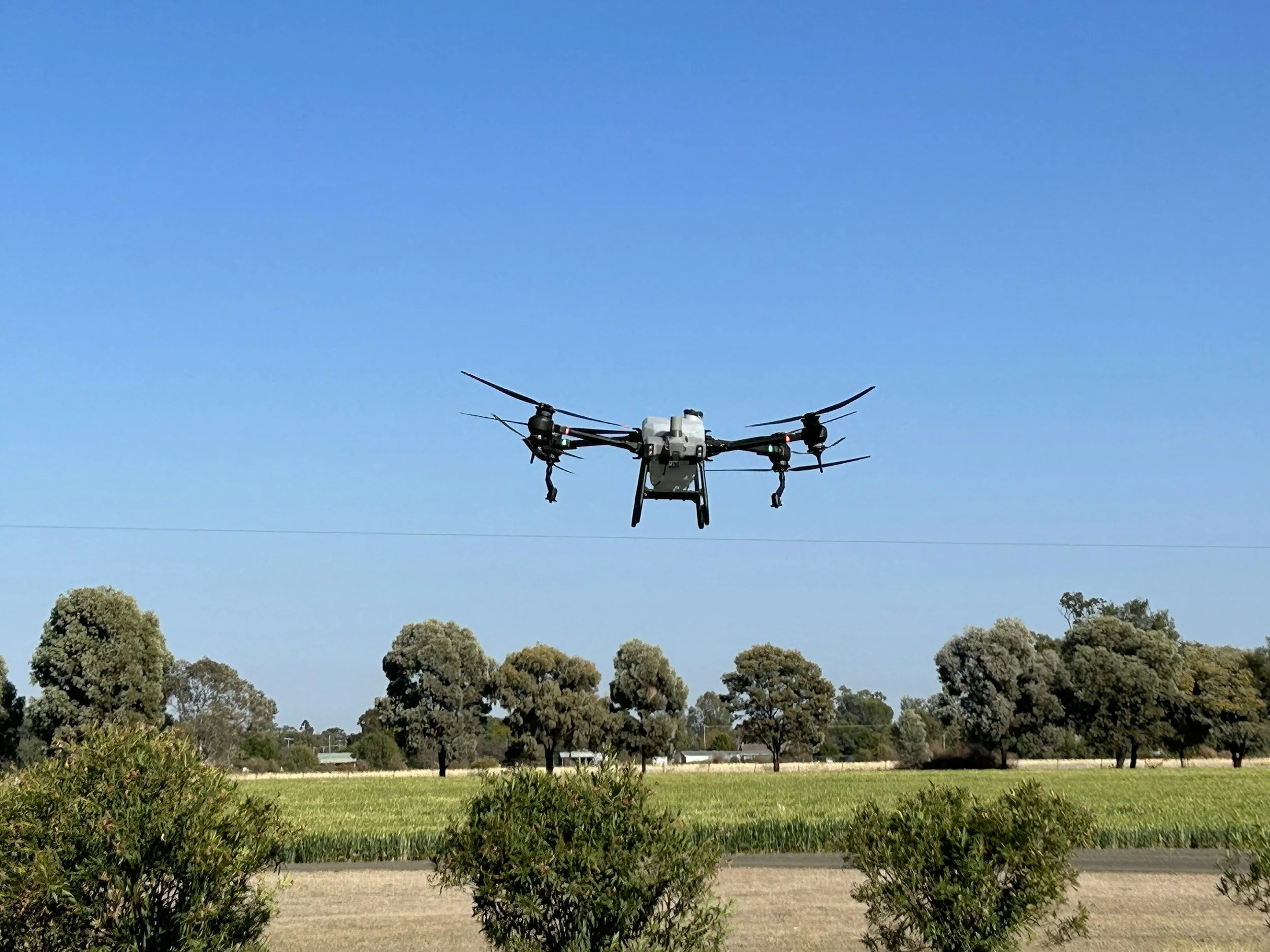
NIR Spectroscopy from Drones: The Reality Behind the Promise
Near-infrared sensing has transformed precision agriculture and environmental monitoring — but strapping a spectrometer to a drone introduces a chain of physical and practical complications that brochures rarely mention.

Particle Size and Its Impact on Spectroscopic Calibration: Why Wet Materials Demand a Smarter Approach
Spectroscopy is not immune to the physical realities of the materials it analyses. Among the most consequential and frequently underestimated of these realities is particle size. Whether a material is measured in its dry powder form or suspended in a wet, heterogeneous matrix, the distribution and scale of particles fundamentally shapes the spectral signal — and by extension, the quality of any calibration model built from it.

NIR, MIR, and Raman Spectroscopy: A Comparative Guide to Choosing the Right Technique
Walk into any modern analytical laboratory — or onto any well-instrumented production floor — and you are likely to find at least one of three spectroscopic technologies at work: near-infrared (NIR), mid-infrared (MIR), or Raman spectroscopy. Each exploits the interaction of light with molecular bonds to generate a chemical fingerprint. Each has found a home in quality control, process analytical technology (PAT), research, and regulatory compliance. And yet they are far from interchangeable.

Through the Glass: A Practitioner's Guide to Spectroscopic Windows, Cells & Optics
The glass between your light source and your detector is never neutral. Every optical material has a transmission window, a refractive index, a hardness, and a price — and choosing the wrong one can silently corrupt your data or simply make your instrument impossible to maintain.
Into the Dark: Why NIRS Struggles with Absorbent Samples — and How We Fix It
Dark, highly absorbent matrices are among the most persistent challenges in near-infrared spectroscopy. Understanding the physics of why they fail reveals exactly what needs to change — in instrument geometry, sampling strategy, and sample containment.
In Defense of the Black Box: Neural Networks in Modern Spectroscopy
Critics call them uninterpretable. But neural networks are quietly solving problems that classical spectral analysis cannot — and interpretability tools are closing the gap.
Chemometrics in NIR Analysis: The Right Tool for the Job
Near-infrared spectroscopy has become one of the most widely deployed analytical techniques in industry. Pharmaceutical QC lines, grain elevators, polymer plants, and dairy processors all use NIR instruments to make rapid, non-destructive measurements with no sample preparation and no reagents. The hardware has matured enormously. Instruments are cheaper, more stable, and more miniaturized than ever before.